
Economic Development and Energy Landscape: Energy serves as a global economic engine, classified into fossil (coal, gas, oil), renewable (solar, wind, hydropower, etc.), and nuclear sources. India, with the world’s fourth-largest renewable power capacity, aims for 500 GW by 2030, constituting 39.2% of its total capacity.
AtmaNirbhar Bharat Mission and Economic Resilience: Launched in May 2020, the AtmaNirbhar Bharat initiative, with a Rs 20,000 crore economic package, emphasizes self-reliance through “Make in India.” The five pillars include Economy, Infrastructure, System, Vibrant Demography, and Demand.
Promoting Industry Growth and Job Creation: To achieve a $5 trillion economy, the PLI schemes, including High Efficiency Solar PV Modules manufacturing, receive significant government commitment of nearly 1.97 lakh crores over five years. This initiative aims to create global champions, stimulate industry growth, and generate employment.
Budget Allocations and Sector Boost: Union Budgets allocate capital funds, with Rs. 1,000 crores to Solar Energy Corporation of India and Rs. 1,500 crores to the Indian Renewable Energy Development Agency in 2021-22. The 2022-23 budget adds Rs. 19,500 crores under the PLI scheme to further enhance local manufacturing of high-efficiency solar modules, emphasizing fully integrated manufacturing unit
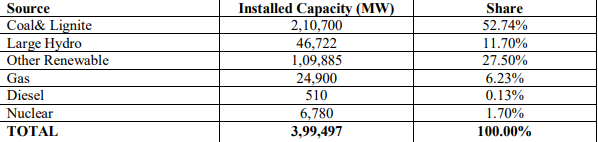
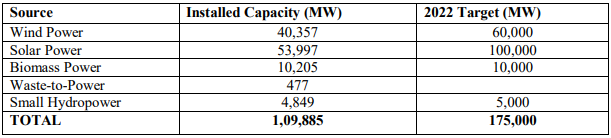
AtmaNirbhar Bharat: Driving Renewable Energy Opportunities : The AtmaNirbhar Bharat initiative has catalyzed opportunities for renewable energy, especially solar. Government reforms, such as collateral-free loans, liquidity schemes, and tax reductions, aim to enhance ease of doing business and promote energy-related hardware improvements.
Empowering Domestic Manufacturing : To boost domestic manufacturing, the government introduced Section 115 BAB for a lower tax rate of 15% for new manufacturing companies. Plans to provide a land bank for industrial clusters further support this initiative. Swadeshi manufacturing of Li-Ion batteries, crucial for electric vehicles and energy storage, is gaining momentum, with companies like Adani and Tata expressing interest. This shift will not only reduce generation costs but also increase exports, fostering R&D investments.
Employment Impact and Environmental Benefits : Under AtmaNirbhar Bharat, the scheme is expected to create direct employment for over 30,000 individuals and indirect employment for 120,000 in ancillary industries. The allocation of a Rs. 1,000 crore capital fund to the Solar Energy Corporation of India (SECI) has propelled tenders for 15,000 MW, involving an annual investment of Rs. 60,000 crore and creating direct employment for 45,000 persons annually. This initiative is set to reduce carbon emissions by 28.5 million tons of CO2 per year.
National Institute of Solar Energy and Economic Impact: The National Institute of Solar Energy, under MNRE, plays a pivotal role in certification, skill development, R&D, and testing for solar energy generation. Economic analysis indicates that a 1% increase in renewable energy consumption contributes to a 0.105% increase in GDP and a 0.100% rise in GDP per capita. Similarly, a 1% increase in the share of renewable energy in the energy mix correlates with a 0.089% increase in GDP and a 0.090% rise in GDP per capita.
Challenges in Indian Solar PV Manufacturing Amid COVID-19 Impact : The global economic slowdown due to COVID-19 has exacerbated challenges in installing and scaling up the supply chain for the energy sector’s hardware and services.
Dependency on Imported Solar Modules : Indian solar PV manufacturing units heavily rely on imported solar modules from China and Germany. With only 246 patents, India lags significantly behind China (39,784 patents) in solar technology competency. Substantial capital incentives are needed for technological advancements.
Need for Indigenous R&D and Skilled Workforce : To reduce dependency and enhance technology, India must establish indigenous R&D for cost-effective, cutting-edge solar panel manufacturing. There’s a shortage of skilled professionals, including manufacturing and design engineers and assembly line workers. Institutions like NISE, IIT, ITI, and the National Skill Development Council should focus on developing these crucial skills for the success of the Make in India project.
High Investment Barriers and Interest Rates : Setting up solar manufacturing units requires substantial investment, and high-interest rates (11% in India compared to 5% in developed countries) act as a significant barrier. Regulatory bodies need to establish standardized terms and conditions to prevent market monopolies and encourage a competitive landscape.
Empowering India’s Renewable Energy Future under AtmaNirbhar Bharat : Despite challenges, AtmaNirbhar Bharat Abhiyaan presents significant opportunities for India’s renewable energy (RE) ambitions, with substantial policy reforms and budget allocations in Union Budgets 2021-22 and 2022-23.
Government Initiatives for RE Flourishing :
1. Approval of 45 solar parks with a combined capacity of 37 GW.
2. Implementation of the world’s largest hybrid solar-wind project in Gujarat.
3. Approval of one solar city in every state.
4. Opening new investment avenues in wind-solar hybrid, offshore wind energy, and floating PV projects.
5. Substantial reduction in solar tariff to Rs. 1.99/kWh from Rs. 6.47/kWh and wind tariff to Rs. 3.00/kWh from Rs. 5.92/kWh in the last six years.
6. Introduction of the Uniform Renewable Purchase Obligations scheme, mandating distribution licensees to purchase a minimum quantity of their total requirements from Renewable Energy Sources.
7. A government target to reduce total carbon emissions by 1 billion tonnes by 2030.
Collective Responsibility for AtmaNirbhar Bharat : Achieving AtmaNirbhar Bharat goes beyond the government; it becomes the duty and responsibility of every citizen. Striving for self-reliance should be embedded in every aspect of Indian society, fostering a collective effort for a resilient and sustainable future.