Managing OEE
Mastering OEE Through Automation: From Reactive to Predictive Excellence
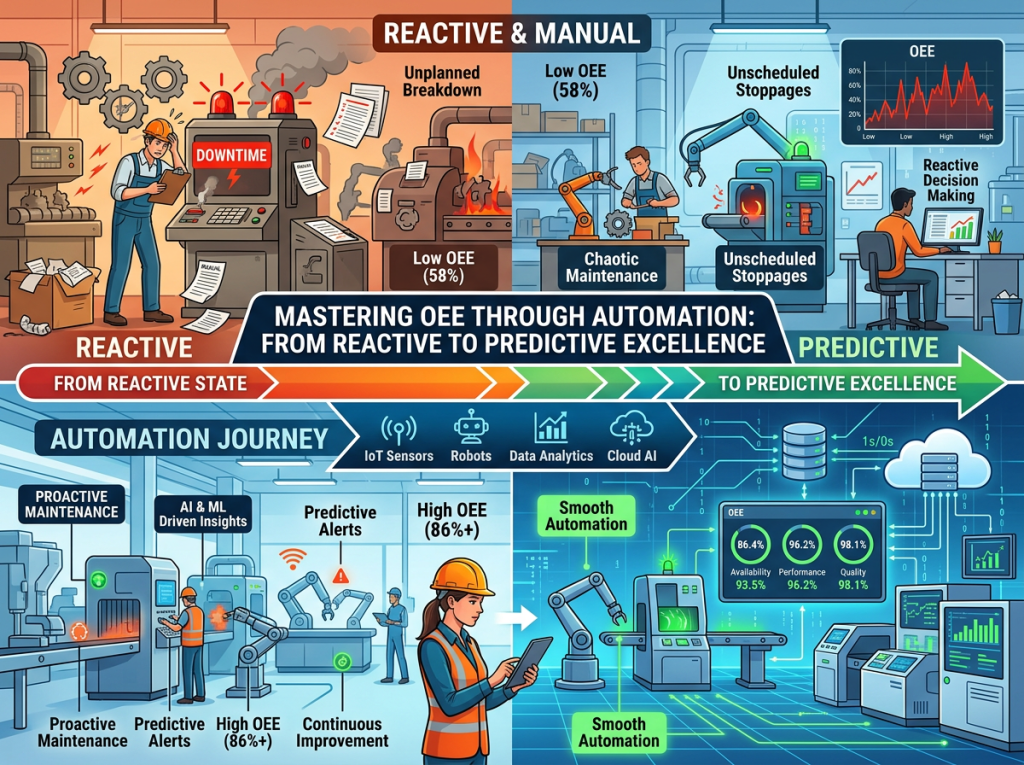
Automation revolutionizes Overall Equipment Effectiveness (OEE) management by integrating real-time data analytics, predictive maintenance, and intelligent scheduling, elevating manufacturing performance beyond traditional limits. OEE, calculated as Availability × Performance × Quality, typically hovers at 60% industry-wide but reaches world-class 85%+ with automated systems. This essay explores how forward-thinking leaders leverage automation to unlock these gains.
The OEE Bottleneck: Why Manual Management Falls Short
Manual OEE tracking relies on sporadic audits and reactive fixes, missing micro-downtimes that erode 20-30% of potential output. Spreadsheets and human oversight introduce errors, delaying root-cause analysis for performance dips or quality defects. Automation deploys IoT sensors and AI dashboards for continuous monitoring, pinpointing issues in seconds rather than days.
Predictive Power: Automation's Core Engine for Availability
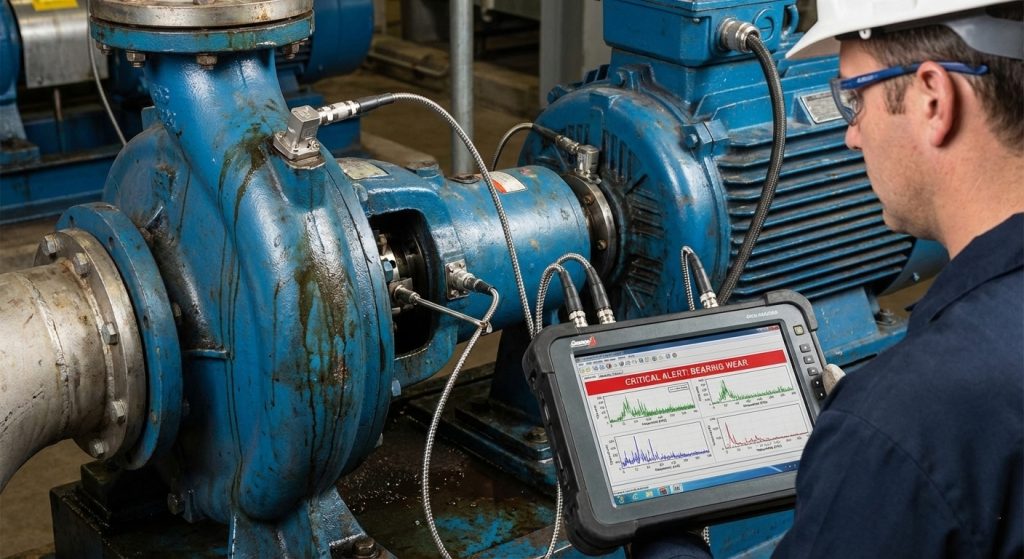
Unplanned downtime claims 5-20% of production capacity, but predictive maintenance algorithms analyze vibration, temperature, and usage data to forecast failures 72 hours ahead. Automated work orders trigger preemptively, slashing breakdowns by up to 50% and boosting availability from 90% to 98%. In high-volume lines, this translates to millions in reclaimed throughput annually.
Performance Unleashed: Real-Time Optimization at Scale
Automation synchronizes machine speeds with demand via adaptive algorithms, eliminating idle overruns and minor stops that fragment performance scores. Dynamic scheduling software balances loads across assets, achieving 10-15% throughput lifts without capital upgrades. Quality gates embedded in robotic inspection ensure defect-free runs, pushing the quality multiplier toward 99%
| OEE Pillar | Manual Challenge | Automated Solution | Typical Gain |
|---|---|---|---|
| Availability | Reactive repairs | Predictive alerts | +5-10% |
| Performance | Speed mismatches | Real-time balancing | +10-15% |
| Quality | Post-inspection rejects | Inline AI checks | +2-5% |
The Automation ROI: Metrics and Momentum
Organizations automating OEE report 20-40% overall uplift within 12-18 months, with payback periods under one year through reduced waste and energy savings. Scalable platforms like MES and IIoT hubs future-proof operations for Industry 4.0, enabling seamless integration of AI for autonomous adjustments. Leaders prioritizing this shift don’t just manage OEE—they multiply it.
Redefining Manufacturing Mastery
Automation transforms OEE from a lagging indicator to a proactive compass, positioning stable operations for exponential growth. When processes settle, automated intelligence ensures they evolve, sustaining competitive edges in volatile markets. The message is clear: automate OEE today to dominate tomorrow.